Attracting Top Talent in Aviation: Strategies for Future Success

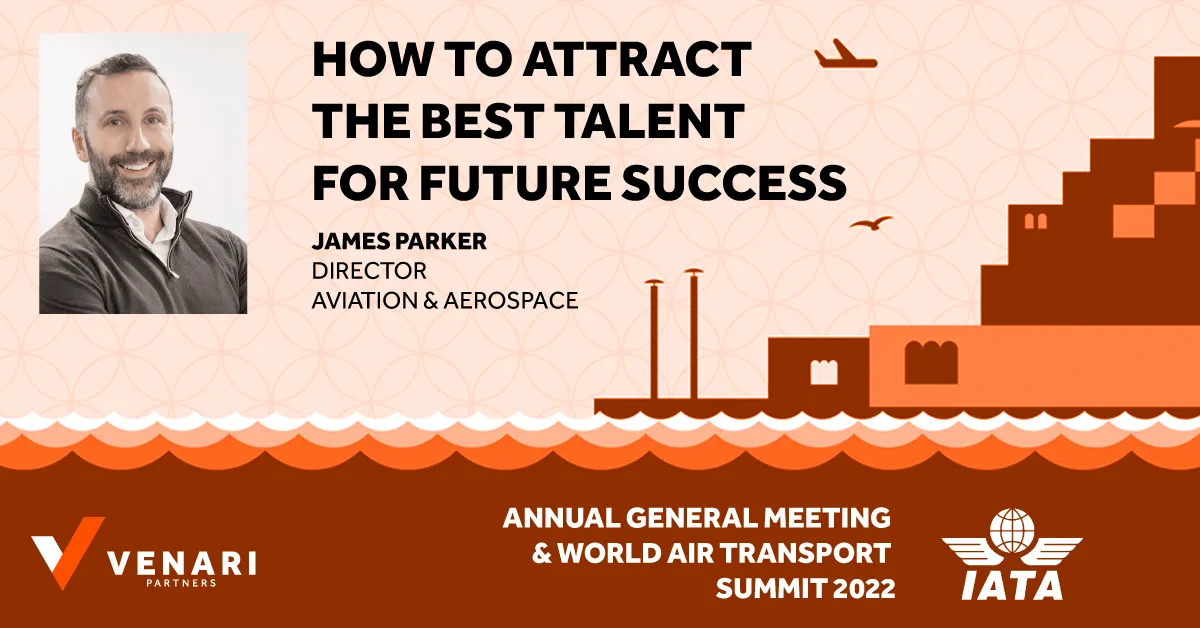
We were recently asked byIATAAirlines.magazineto share our insights about the Aviation talent market in theirAGM Issue, which is now available to read ahead of their 78th AGM and World Air Transport Summit. This major event for aviation, taking place in Doha on 19–21 June 2022, will gather top leadership from the industry, as airlines face complex and dynamic operating, business and geopolitical environments.
James Parker, our Director of Aviation, Transport and Logistics, warns that airlines are not out of the woods yet.
At the same time, aviation skills have become more transferable. Take the logistical requirements of such companies as Amazon, for example. An aviation background is highly prized.
There are, however, solutions to help an airline, or any stakeholder in the aviation value chain, attract and retain the best talent.
A good start is building a talent pool. Recruitment can never be about just filling jobs. The aim is to engage with talent in advance of them making a move. It allows an airline to build for the future.
In essence, airlines need to understand where the best talent is coming from to ensure they have a strong pipeline of talent coming through the ranks. Do they have a Chief of Maintenance successor, for example?
The recruitment process also needs to be more akin to a customer experience. Allowing the company culture to shine through the narrow tunnel of recruitment is a proven methodology. Associated with this is the speed of the recruitment process. Long wait times are not a good
sign in any aspect of the industry. Seamlessness is the name of the game.
This extends beyond the job interview and into the first few months of the new placement.
Diversity is another area that cannot be ignored. Airlines are working hard to understand that the Diversity, Equity and Inclusion (DE&I) demographic can add significant value and breadth to the talent pool. Investing in DE&I can take many routes. It can mean a proactive recruitment strategy, examining how competitors achieve diversity or understanding which internal functions lack diversity. Some airlines do this better than others, but ultimately more work must be in done in this space.
A final factor in the recruitment process, and perhaps the hardest to implement, is the issue of salaries. Simply, airlines need to pay more for the top talent. In general, says Parker, base salaries are increasing, and bonuses are becoming less formalized. But the fact is that if other industries pay more, airlines will lose or fail to attract talent. This may be a bitter pill to swallow in the financial climate, but top talent will always bring value.
For staff in situ, as well as new employees, aviation will also need to look closely at remote working, a concept that has become especially popular due to the pandemic.
The solution again lies in being agile. If an airline recruits from abroad, for example, does the new employee need to move immediately? Perhaps the transition can happen over 12 months, allowing them time to get to know their new home so that the final move is easy and doesn’t affect their focus on the job.
Innovative thinking will also allow aviation companies to address key areas of recruitment, such as technology experts. Tech Hubs in diverse locations may be a way to access talent from around the world.
You can read the rest of the Airlines. magazine AGM issuehereor below.
Tags:


- Insight
- Talent Strategy
- Executive Search

James founded Venari Partners after previously working at Investigo and Marks Sattin. He oversees our Aviation & Aerospace practice and has worked in the space extensively throughout his career. Boasting a global reputation as an industry leader in executive search for airlines, James has assisted countless clients to make prominent senior appointments and build teams, acting as a trusted advisor on talent analysis and market patterns.
View Full Profile